
How to Search the St. Joseph County Jail Roster
The St. Joseph County Police Department runs the county jail and posts current inmates through JailTracker, a public roster system. It is free to search. The roster shows people held in the county jail, not those sent to state prison or held in federal custody. A name search returns booking and charge details when they are public.
Before you search, have the person's name ready, and a date of birth if you have one. The roster may ask you to clear a captcha to prove you are not a bot. That step is normal and protects the system from automated scraping.
- Open the St. Joseph County JailTracker roster.
- Complete the captcha if the portal shows one.
- Enter the last name, then the first name to narrow results.
- Review the result rows for name, booking number, and booking date.
- Open the detail page for charges, bond, court date, and arresting agency.
The roster is the official county source for current inmates. You can reach it through the JailTracker page for St. Joseph County.

Because the roster is a live snapshot, an entry can change or drop off as a person is released or transferred.
St. Joseph County Jail Roster Search Fields
The JailTracker search is simple by design. A few fields handle most lookups, and the search type can switch between current and released inmates on some installations. The table lists the fields you may see.
| Field Label | Type | Required | Notes / Format |
|---|---|---|---|
| Last Name | Text | Often yes | Main name search for the public roster. |
| First Name | Text | No | Narrows common surnames. |
| Search Type | Dropdown | No | Current inmates or released inmates where offered. |
| Released Since | Date | No | For release searches when enabled. |
| Captcha | Challenge | Conditional | Required when the portal triggers anti-bot checks. |
| Search | Button | n/a | Runs the query. |
If a name returns nothing, try fewer letters or a different spelling, since the roster matches on the stored booking name.
What a St. Joseph County Inmate Profile Shows
An inmate detail page can carry a long list of fields, though not every field shows on every entry. The software and the charge status control what is public. The table maps the common fields to what each one tells you.
| Field | What It Shows |
|---|---|
| Name and booking number | The person and the unique booking event. |
| Booking date and time | When the jail processed intake. |
| Charges and charge level | The offenses and their severity. |
| Bond amount and type | What may secure release. |
| Court name and court date | Where and when the case is set. |
| Arresting agency | The agency that made the arrest. |
| Holds and hold type | Any reason the person cannot be released. |
A booking photo may appear when the jail enables it. Warrant numbers, control numbers, and a final release date can also show when public.
The Booking and Bond Process
Booking is the intake step after an arrest. The arresting agency brings the person to the jail, where staff collect identifying information, property, a booking photo, and fingerprints, then run a medical and security screening. The person is classified for housing based on safety and case factors.
Bond determines release. It can be cash, surety, or set with conditions, and a no-bond hold keeps the person until a hearing. Court timing depends on the offense, any warrant, and the court schedule under Indiana criminal procedure. Release follows bond posting, a court order, a sentence completion, a transfer, or a charge resolution. For arrest detail that leads to a booking, see the St. Joseph County arrest records page.
St. Joseph County Jail Facility
The county jail is run by the St. Joseph County Police Department in South Bend. It is the holding facility for people arrested in the county and for those awaiting court dates or serving short sentences. Use the contact card below to reach the jail, and confirm current hours and rules on the official jail page before you visit.
The St. Joseph County Police Department site links the roster, visitation policy, and records division. Visit it at the St. Joseph County Police Department homepage. Leadership at the department can change with elections and appointments, so verify the current sheriff or chief there as well.
Charges, Holds, and Court Dates
The roster ties a person to their pending cases. Charges show the offenses booked at intake, which can change once the prosecutor files. A hold tells you the person cannot be released for a stated reason, such as another agency's warrant, an out-of-county matter, or a federal detainer.
Court fields point you to the case. The court name, court type, and court date let you look up the matter in Indiana MyCase for the full history. If the roster and the court record seem to differ, the court record controls, so confirm details with the court using the case number.
Multiple charges can sit on one booking, each with its own level and bond. A person may face a felony count and a misdemeanor count at once, and the roster lists them together. Counts, charge status, and bond per charge all affect whether and how a person can be released, so read every line rather than just the top charge.
St. Joseph County Jail Visitation
Visitation rules change, so the official visitation policy is the source to check before you go. Jail visits may be onsite, video-based, or both, depending on current policy. Attorney visits are handled apart from social visits and are more flexible. The schedule table below lists the visit types and where to confirm each one.
| Visit Type | Schedule | Notes |
|---|---|---|
| Social visitation | See official visitation policy | Visitor ID and approval as required. |
| Video visitation | See official jail or provider page | A provider account and fees may apply. |
| Attorney visitation | Contact the jail | Attorney identification required; not a social visit. |
| Clergy or advisor | Contact the jail | Approval required under jail policy. |
Visits can be denied for a dress-code issue, intoxication, disruptive behavior, a warrant, or a prior restriction, and a lockdown can cancel visits without notice. Confirm the policy at the St. Joseph County jail visitation policy page.
Mail, Phone, and Commissary
Sending mail or money follows the jail's current rules. Use the official jail page for the mailing address format, and include the inmate's full name and booking number if the jail requires it. Many jails scan mail or limit packages, so check the rule before you send anything.
Commissary, phone, tablet, and video services are usually run by outside vendors. Provider names and fees must be verified on the jail or vendor page. Do not send cash by mail unless the jail page expressly allows it, since cash and contraband are common reasons mail is rejected.
Funds usually go onto an inmate account through an approved deposit method, which an inmate then spends at the commissary on snacks, hygiene items, and phone or tablet time. Prohibited items in mail commonly include cash, explicit material, staples, and anything that could hide contraband. When in doubt, the jail's published rules settle the question, since policies differ from one facility to the next and change over time.
County Jail Compared to State Prison
People often expect one search to cover every inmate. It does not. The county jail and the state prison system are run by different agencies and tracked in different databases. Knowing which one holds a person saves a wasted search.
- The county jail holds people awaiting court, serving short sentences, or on a hold.
- State prison holds people sentenced to longer terms by a court.
- The county roster is JailTracker; the state search is the Indiana DOC offender lookup.
- A person can move from the county jail to state prison after sentencing.
So if the roster shows no current record but you know there was a conviction, the person may have been transferred to state custody. Federal cases are a third path entirely, handled through the Bureau of Prisons rather than either state system.
Attorney and Family Access
Family members and attorneys have different access. Attorneys can arrange professional visits that are more flexible than social visits, and they may reach a client by phone or in person under the jail's legal-visit rules. Family and friends use the social visitation system, which runs on a set schedule and requires identification and prior approval.
For case questions, the court record in MyCase is open to anyone. For custody and welfare questions, the jail's information line is the right contact. A person who cannot afford a lawyer should ask the court that handles the case for appointed counsel, since the court, not the jail, decides eligibility based on a financial affidavit.
VINELink Release Notifications
If you want to know when a person's custody status changes, register with VINELink Indiana. The free service tracks custody and sends alerts by phone, email, or text when a registered person is released or moved. Crime victims and family members often use it for peace of mind.
You search by name or ID, select Indiana, and then register for notifications. VINELink covers many Indiana facilities, so it can track both county and state custody in one place.
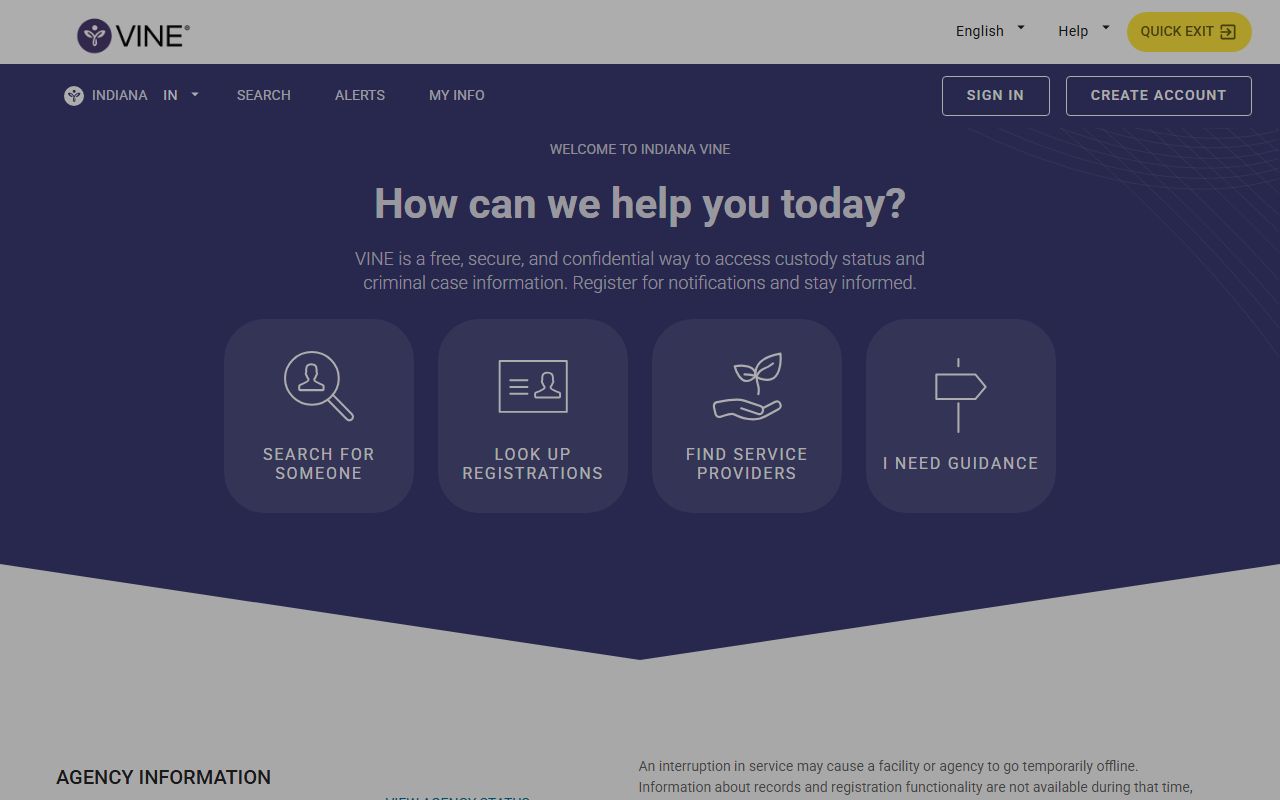
Notifications are only as current as the data the facility feeds the system, so verify a critical release with the jail too.
State Prison and Federal Inmate Searches
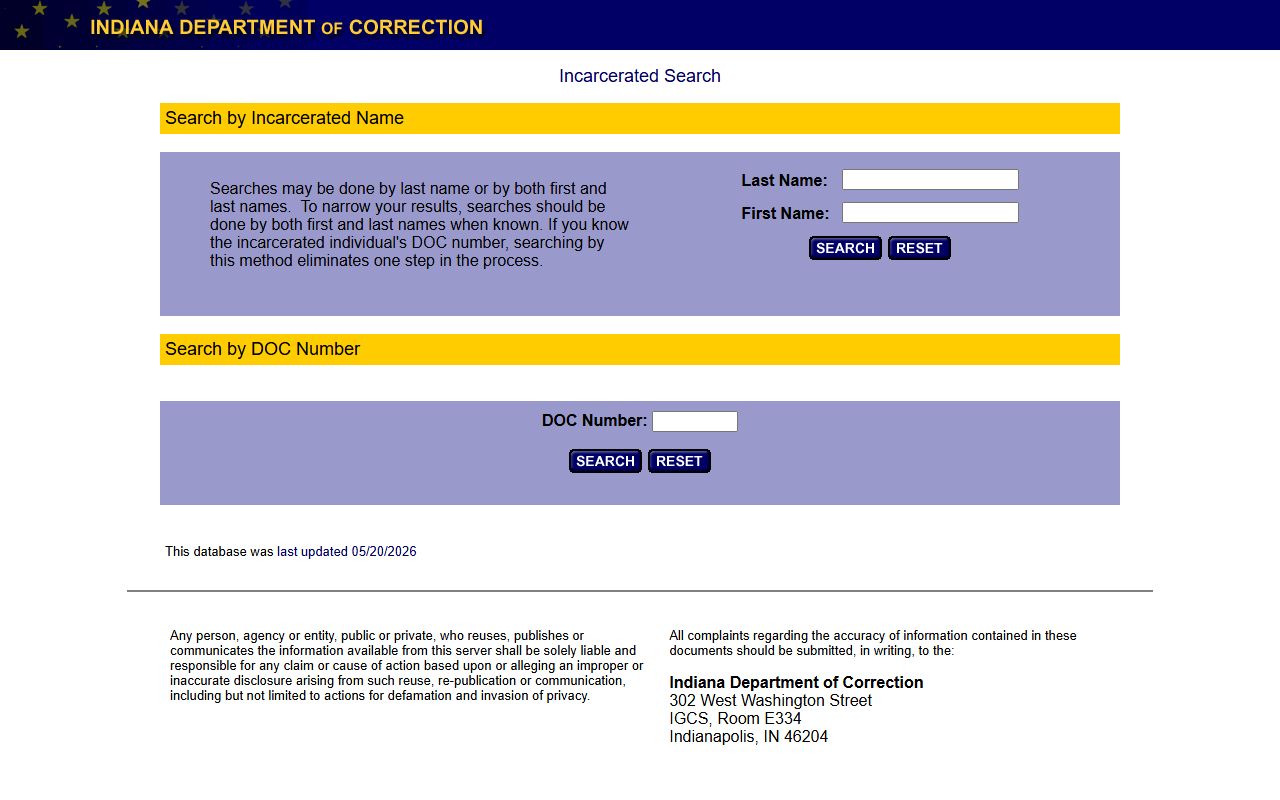
The county roster only covers the county jail. If a person was sentenced to state prison, search the Indiana Department of Correction offender lookup. The IDOC search returns a DOC number, facility, sentence information, and an earliest possible release date when public.
For federal custody, the Federal Bureau of Prisons runs an inmate locator. It covers people held in federal facilities, which is a separate system from both the county jail and state prison.
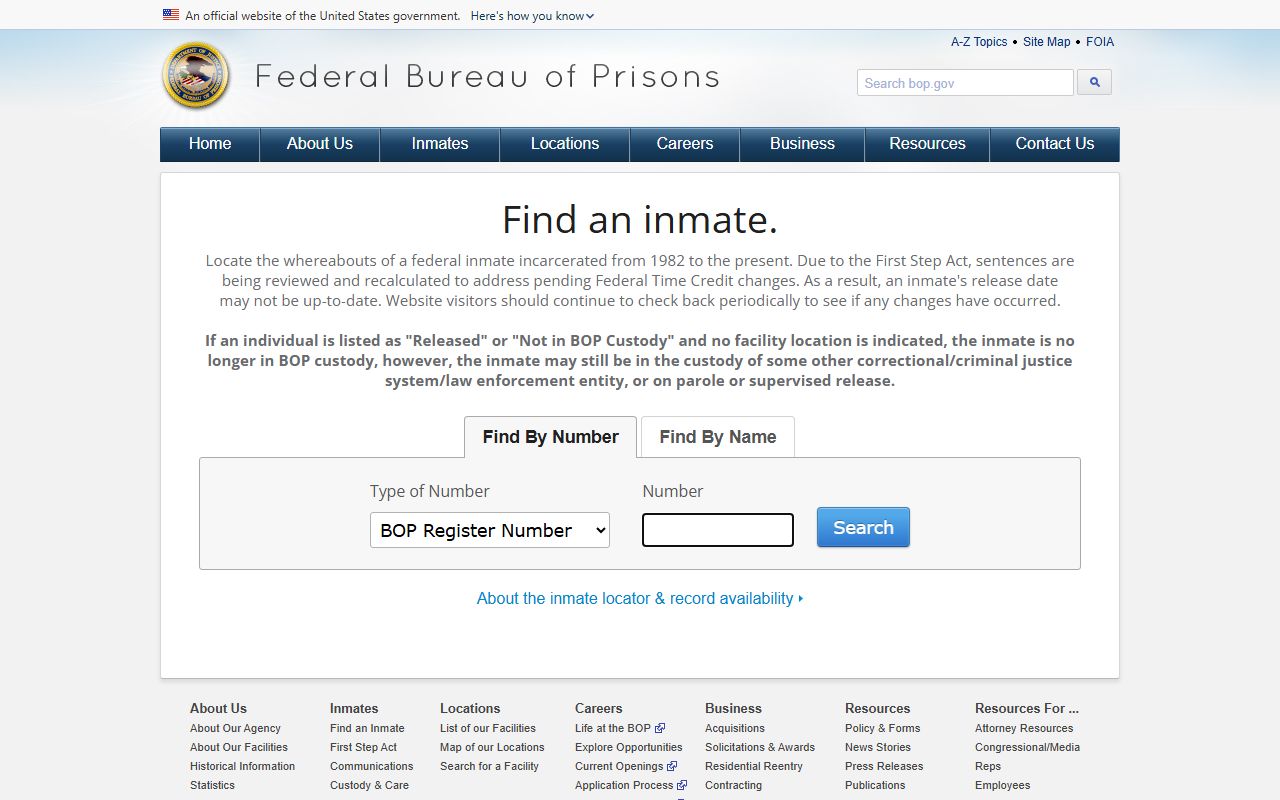
The BOP locator searches by register number or by name, race, sex, and age. To verify a recent county release, the St. Joseph County released inmates page walks through every option.
Checking Whether Someone Was Released
Release questions come up often. The roster is the first check. If a person no longer appears as a current inmate, they may have been released, transferred, or moved to state custody. Some JailTracker installations offer a released-inmate filter or a released-since date, which can confirm a recent release.
When the roster is unclear, call the jail with the person's name, date of birth, and booking number. You can also check MyCase for a bond order, a sentence, or a release-related court entry. For a step-by-step on every release tool, including state and federal options, the released inmates page covers the full process.